If you have stumbled upon this site, I do not post here any more, not since 2013. Most of my posts spanned over my career in technology digital media and wine travel and events. Now, I am manage Canada for UK-based wine company Boutinot International.
Author Archives: Megan
at the TABLE: Viva Vino Bianco
Posted by Megan
on April 20, 2013
No comments
Featured article, BC’s quarterly magazine of fine food, wine and spirits: at the TABLE Spring 2013

Springtime is here. So what better way to crack into a new season of wine-sipping than to explore a mere fraction of what is available to us in the white wine category from Italy – and the more random the grape and wine, the better.
One thing is for certain, from Piedmont to Sicily, Italy is spilling over with grapes. Wine is their culture, their religion, it runs through their veins. Wine makes Italians, well, Italian. It is a rite of national pride and a part of their every day.
Thankfully, following centuries of rising and falling empires in Europe, Italy is left with a grand patchwork of indigenous grapes, vibrant growing regions and varying winemaking techniques that would take a lifetime to fully understand and appreciate. The vast number of labels, language hiccups, acronyms and grapes that don’t read familiarly is an intimidating roadblock for the majority of us.
Starting with a recognizable fan-favourite from the northwest, Muscat, or Moscato, a grape mostly associated with the sweeter sparkling wine style of Asti. Because of the recent Moscato sweet-wine craze that has hit the shelves in droves across North America, finding a quality dry Moscato can be tricky. Pick up Alasia Sec Vino Da Tavola Bianco 2011 ($20). Floral, fresh – and dry – this is a very quaffable, light and delicate wine, fit for any patio and a homerun of a wine for any occasion this spring.
Among the great Barolos and Barbarescos of Piedmont is a relatively unknown white variety, Arneis, which has gained recent attention. Arneis is responsible for this region’s perfumed signature dry white wine. Used in the past to soften the robust Nebbiolo, the wine is full-bodied and elegant. Usually unoaked and intended for drinking in its youth, the rich concentration of pear and peach with a hint of nuttiness makes this a decadent food wine. The best examples are from the Langhe and Roero – try the 2010 Roero Arneis by Matteo Correggia ($32), one of this region’s modern and innovative winemakers.
A classic example of an indigenous grape showing off on its home soils is Verdicchio, having become one of the more popular white grapes from Italy. Colle Stefano’s Verdicchio di Matelica 2011 ($25) from The Marches’ hilly terrain in central Italy is delicate yet with a vibrant, marked acidity that is nicely balanced by a creamy texture and a clean finish. This is a fabulous little wine. Enjoy it on its own or with some briney seafood.
To the south, the hot and arid island of Sicily was once the Mecca of high yields, high production bulk juice shipped as table wine for the rest of the country. Now producing more sought-after wines of higher quality and elegance, the white wines made from the likes of Inzolia or Grecanico grapes need not be memorized or even pronounced correctly, just try them. Tasca d’Almerita Regaleali Biano 2010 ($25) is an ideal afternoon wine. Ripe fruits with a rich mouth-feel, this wine is perfect with a light seafood dish or a cold duck salad.
With an ideal Mediterranean grape-growing climate, Sardinia is starting to show its strength in modern winemaking from a few prominent producers. Argiolas’ Vermentino di Sardegna ‘Costamolino’ 2011 ($22) is a ripe, lemony, mouth-coating gem of a wine. Fresh herbs and lemon custard that linger on the finish, enjoy it with a seafood and pasta feast.
Inland and north of the Amalfi Coast is the commune Avellino in Campania. Fiano di Avellino from Terre Dora 2010 ($35) is an excellent wine with serious finesse. From a single vineyard site, this wine is creamy, yet refreshing, with great structure and complexity. Made from the Fiano grape, it will not disappoint.
Italian white sparkling wine and springtime go hand-in-hand. A popular Prosecco found on most shelves is the Adami wines – and there are plenty of styles from which to choose. Try the Bosco di Gica Brut – fruity, dry, light and vibrant, with a foamy froth that adds texture and body. Half bottles at $20 – perfect for a picnic in the park.
A unique lightly sparkling wine, made predominantly from Glera, or more commonly known as Prosecco, is Costadilà’s Bianco Colli Irevigiani 330 ($25) – the 330 is named for the site’s elevation. The wine is fermented dry, then blended with passito juice in the bottle under a crown cap for the second fermentation, a method known as méthode ancestrale. This off-the-beaten-path wine is light, medium sweet and juicy, and is a wine-lovers wine. And don’t be alarmed by the small deposit in the bottle – it’s what gives this wine a kiss of toasty brioche. Chill, decant and enjoy. Quite simply, it is absolutely delicious.
Italy is far too vast and much too exciting, not to mention complicated, to sum up wine selections in one short article. Additional to the above, also hunt for the following:
Gavi from the Cortese grape in Piedmont – perhaps one of the best-known Italian white wines in the northwest. Bone dry, intense in its structure, fragrant and lively – a sure bet.
Soave Classico, made from the Garganega grape variety, these wines are steely and textured, easy to drink, won’t offend a soul, and the Classico examples, such as those wines from Stefano Inama, have some significant depth.
In the heart of Tuscany where the red Sangiovese reigns, try the white Tuscan Vernaccia di San Gimignano, a dry wine that is full of character and fine elegance.
Orvieto Classico in Umbria, yet another classic wine region in central Italy, shows off various styles from light and fruity dry wines to Antinori’s Cervaro blend of Chardonnay and Grechetto – a wine that rivals even the best Chardonnays in the world.
photo credit- Raeff Miles
Life In Bordeaux: The Wrap Up
Posted by Megan
on May 13, 2011
No comments
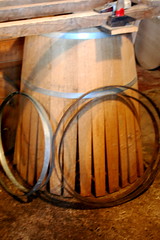 On our last morning, we met with Château Smith Haut Lafitte’s winemaker Fabien Teitgen, who highlighted the nuances of the terroir and the challenges of organic and biodynamic winemaking in Bordeaux. To sum it up in one sentence: it’s all in the soil. This Château is also one of the few in Bordeaux to still have its own cooper, producing a mere three barrels a day. To select the wood for their barrels (100% french oak), and evidence of the meticulous nature of Fabien’s wine-making, Fabien and the cooper head deep into the forest to literally lick and chew on wood and bark to select their materials.
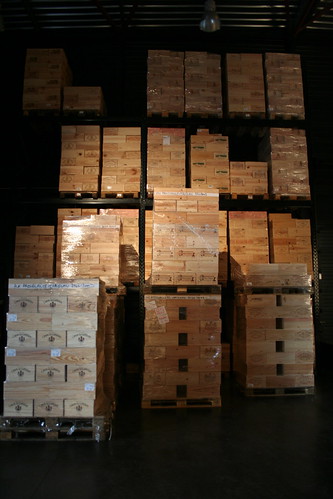 We concluded our tour with a visit to Joanne, one of the major negociant houses of Bordeaux. This business is owned by the Casteja family, whom we met in Barsac at Doisy-Verdrines. Top Bordeaux wine is sold like stocks in a unique trade system, where wine from Chateaux named as Grand Crus Classés (great classified growths) are purchased as ‘futures’ when they are still in barrel. We had the opportunity to visit one of the warehouses where these wines, once bottled, are stored and to learn about the role of a negociant in the Bordeaux trade from the Casteja brothers, Olivier and Eric.
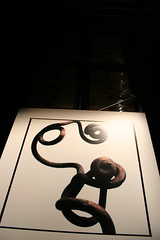 The exterior of the Joanne warehouse is like any other – nondescript. However, inside is a different story. Soft lighting illuminates pallets of wine from the most famous Chateaux – Haut Brion, Mouton Rothschild, Latour – that are stored in beautiful wooden cases, stacked from floor to ceiling, and the walls are adorned with massive pieces of wine-inspired modern art. This space houses hundreds of millions of dollars worth of stock, not to mention the wine owned by Joanne that is still in barrel at their respective Chateaux. Our hosts explained the intricacies and politics of the trade over a casual lunch, as we poured ourselves glasses of their generous offerings from the region. This was the pinnacle learning experience that tied this Bordeaux tour together.
The Best of Bordeaux
Posted by Megan
on May 10, 2011
No comments
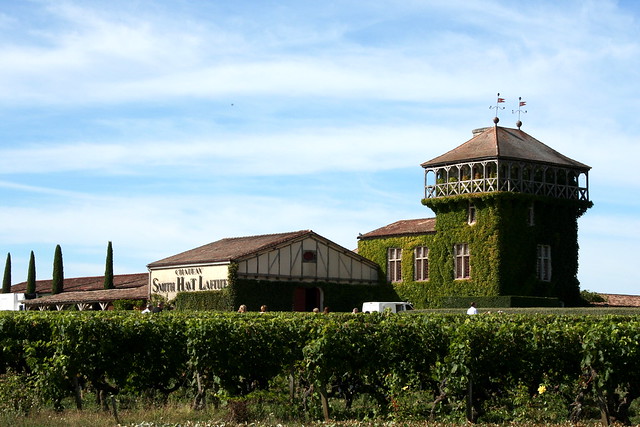
Our Bordeaux tour was led by Master of Wine, James Cluer, who had arranged for us to be hosted at some of the top Chateaux of Bordeaux, properties that are not normally open to the public.
Our accommodations were at Smith Haut Lafitte’s luxurious 5-star hotel, Les Sources de Caudalie, steps from the winery and surrounded by vineyards with a world-renowned spa and a Michelin 2-star restaurant.
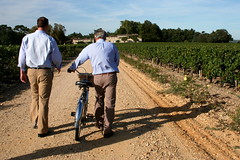 Our tour began at our doorstep at Château Smith Haut Lafitte, one of the top properties in Pessac Leognan. We visited their on-site cooperage followed by a tasting at the home of the gracious Cathiards and a look inside their private underground cellar, with its hidden James-Bond style entrance – a secret door in the floor which opens by remote. We finished the day at the property’s restaurant with a 4-course wine paired dinner.
Onto the Medoc
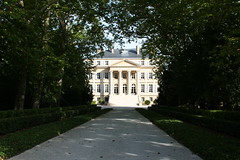 What better introduction to the Medoc than Château Margaux. This is classified as a first growth (Premier Cru Classé), considered by most to produce the greatest wines of Bordeaux. We snapped the famous shot of the Château and headed to the cellars for our tour and tasting.
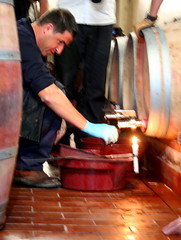
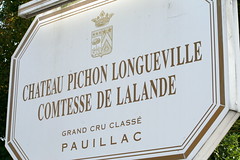 Onward to Château Pichon Lalande to the commune of Pauillac, where we watched the wines being racked in barrels as they matured in their first year chai (cellar). We then enjoyed an exquisite lunch with the head of the property, Gildas d’Ollone. Over lunch Gildas shared his stories of the Bordeaux wine trade, including his visits from Robert Parker, and his endearing tales of his aunt, Madame May-Eliane de Lencquesaing, who through an iron fist transformed the property to the super second growth that it is today.
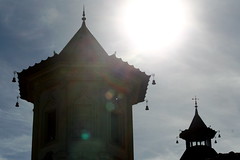 Next we headed to the far north of the Medoc to the commune of Saint-Estèphe, home to some of the most powerful and long-lasting wines of the world. We visited Château Cos d’Estournel, a second growth property run by the Prat family, where the oriental inspired architecture, complete with pagoda towers, matches the rich flavours of the wines. This property uses cutting edge innovations, showcased in a futuristic winery that we viewed from an overhead catwalk, to produce wines that are approachable at a much younger age than most from this region.
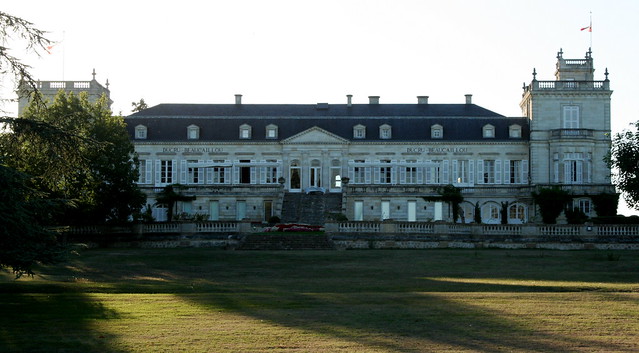
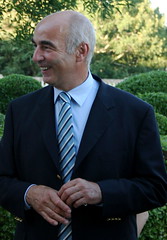
Heading back south to the commune of Saint-Julien, we had the great fortune of being hosted by Bruno Borie, owner of the Ducru Beaucaillou estate, another leading second growth Chateau of the Medoc. We first took a stroll through the property with Bruno to the banks of the Gironde estuary. This was followed by a tasting in his cellars and a dinner paired with a selection of his wines in the main dining room of the Château. After hours filled with much mirth and spectacular wines, the charming Bruno bid each of us bonne nuit.
The Big Hitters of the Right Bank: Bordeaux
Posted by Megan
on March 10, 2011
No comments

We began our journey on the Right Bank of Bordeaux in the historic town of Saint-Émilion. Saint-Émilion is a world heritage site and picturesque town with quaint wine shops, local jewelers and outdoor cafes offering panoramic views of the surrounding vineyards that take your breath away.
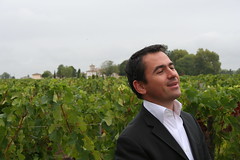 Château Le Bon Pasteur was a highlight. Located in Pomerol, this highly regarded Château, owned by world famous flying winemaker Michel Rolland, is very unassuming. We quickly learned that behind the humble exterior lay new and modern technologies in wine-making that are paving the way for the future of wine. Michel’s son-in-law, David Lesage, hosted our visit. We enjoyed an extravagant lunch in the Rolland home, accompanied by comparison wine flights from different vineyards. We also had the honour of conversing and learning from Michel’s wife Dany.
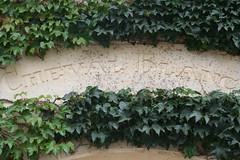 After lunch we travelled the short distance to the peak of Saint-Émilion, to the legendary Château Cheval Blanc. This property was purchased by the luxury goods group Moët Hennessy Louis Vuitton (LVMC) in 1998 and is considered, along with Château Pavie, to be one of the top two properties of this commune.
 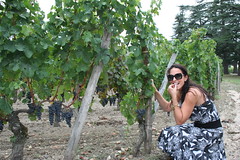 The wines from Cheval Blanc, which are Cabernet Franc dominant rather than the classic Merlot based wines of its’ neighbours, are quite opulent.
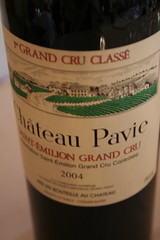 Château Pavie, classified as a Premier Grand Cru Classé (A) in Saint-Émilion is one of the most technically advanced wineries in Bordeaux. We spent our afternoon with Henrique da Costa, the winemaker and son in law to owner Gérard Perse. Since purchasing the winery in 1998, Perse has produced more modern-styled big, fruity wines, pleasuring the palate of the likes of Robert Parker Jr., who recently awarded some Pavie vintages with 100 points.
 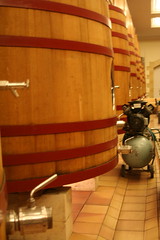 These wines have a balance of remarkable power and polished finesse. The property embodies modernism, with state of the art equipment to handle the single plot fermentation, a barrel cellar that is both beautiful and efficient, a sophisticated sound system so classical music can soar through the winery, “talking” to the wines, and an art collection Christie’s would envy.
After we tasted these exquisite wines, Henrique escorted us to his father-in-law’s Michelin 2-star restaurant, Hostellerie de Plaisance in Saint-Émilion, for an outstanding nine-course tasting menu paired with wines from the Perse Chateaux, including Château Monbousquet and Château Pavie.
Sauternes: How Sweet It Is
Posted by Megan
on February 19, 2011
No comments
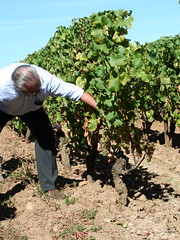 We spent a day in the sub-region of Sauternes, home of the greatest sweet wines in the world. We were welcomed at Château Doisy-Védrines by the owner Olivier Casteja for a tour the property and a lunch in his modest, 2-storey farmhouse. Doisy-Védrines is situated in Barsac, within the Sauternes appellation, and has been owned by the Casteja family for generations.
 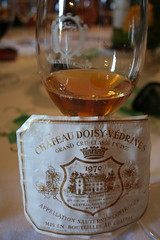 Olivier toured us through the vineyards, explaining the process with which they make their sweet wines. He highlighted their low yields, the effects of Botrytis rot on the grapes and the arduous hand-harvesting procedure that spans for weeks to months; each step essential to the final product. Our 5-course lunch was paired with Doisy wines, with vintages dating back to 1970. It was fascinating to experience how well the sweet wines paired with each course.
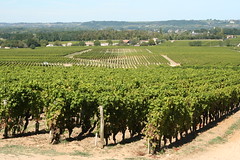 The iconic Château d’Yquem is considered to produce the finest dessert wine in the world. During this rare opportunity to tour the property, we learned about the laborious process of making this exceptional wine. Sauternes is produced by grapes which have been attacked by a fungus called Botrytis cinerea, also known as Noble Rot, that partially raisinates the grapes.
 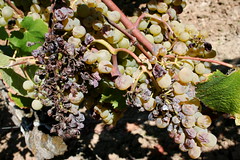 A unique combination of weather is required in order for noble rot to take form (cool misty mornings followed by warm dry afternoons) otherwise grey rot will develop, spoiling the grapes. Hand harvested one grape at a time over multiple passes through the vineyard (up to 14 for d’Yquem), the production of this wine is not only painstaking, but also a gamble with nature, as some years, when the conditions are not ideal, no wine is produced. The wines are reflectively expensive.
 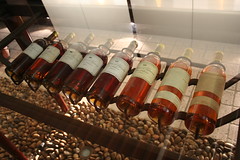 However a good Sauternes is an experience like no other for the senses. This nectar is deep gold in colour, lusciously sweet yet zesty and fresh, with rich tropical and earthy aromas and flavours that linger in your mouth for a very long time.
Barrel Tasting In Burgundy
Posted by Megan
on January 10, 2011
No comments
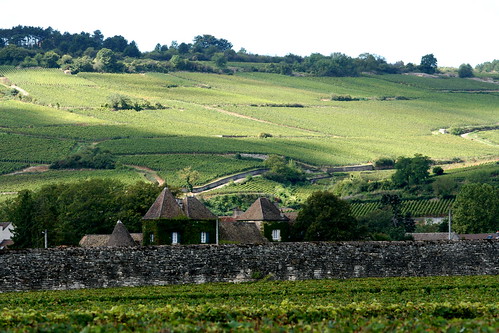
To fully appreciate the diversity of the terroir of the Côte d’Or in Burgundy one must see it with the naked eye. To feel the soils under your feet, and to appreciate the varying degrees of sun exposure along the Côte, I highly recommend a vineyard walk or run as an excellent way to further understand the intricacies of these famous slopes.
Then there’s the romantic and picturesque town of Beaune. Start one’s day at one of the many town squares with a perfectly crafted pain au chocolat and a café or two, as you witness the town wake up. Breakfast is followed by strolling through the narrow cobblestone roads, picking fresh cheeses, baguettes and local produce for your afternoon picnic, and eventually settling into a cozy chair outside one of the many wine bars to taste wines by the glass as you watch the Beaune world go by. 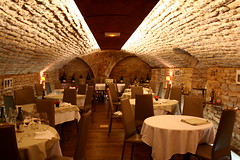 In the evening, descend into one of the dozens of ‘cellar’ restaurants that could double as barrel rooms to undoubtedly enjoy fine wines and gourmet food from the region: foie gras, escargots, coq au vin and boeuf bourgignon cooked a la bourgignonne in Burgundian wine.
Maison Louis Jadot:
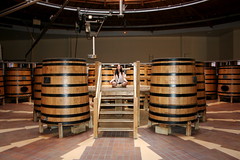 Visiting Louis Jadot was a fantastic experience. We received a very warm and intimate welcome from one of the prominent producers of this region. Jadot has the power of the qi. The winery is in the shape of an octagon, at the heart of which a small platform is perched six feet off the ground under a domed skylight. During long harvest days this is the spot where workers come to re-energize.
Louis Jadot produces an astounding 125 wines, of which we were fortunate to taste 19 from some of the top sites such as Puligny Montrachet, Meursault, Chassagne Montrachet, Gevrey-Chambertain. In their damp and cool expansive cellars, it was an excellent exercise recognizing the sometimes subtle nuances of these appellations.
Domaine Comte Senard:
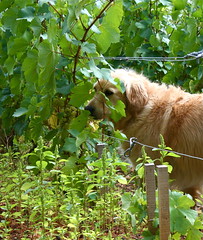 There is no better welcome to a Domaine than that from a Grand Cru Chardonnay-eating Golden Retriever. Domaine Comte Senard, located in Aloxe-Corton, is set high up on the Côte with its Grand Cru sites enclosed by an ancient stone clos. They produce the only red Grande Cru in the Côte de Beaune. Comte Senard owns the oldest cellars in Burgundy which they discovered during an expansion, and in their good fortune unearthed intact bottles from the region – what a coup.
Alex Gambal:
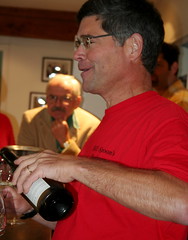 In contrast, we capped off our Domaine tours with a visit with Alex Gambal, a modern day Texan making modern wines in Burgundy. Who would have thought this was possible? With the Napoleonic Code of land inheritance, farmers rule this region. Alex Gambal has gracefully managed to penetrate the traditional political landscape. He shared some of his tales of trials and tribulations of doing business here where verbal contracts are only as good as the Texan pony he rode in on.
In Awe of Alsace
Posted by Megan
on December 9, 2010
No comments
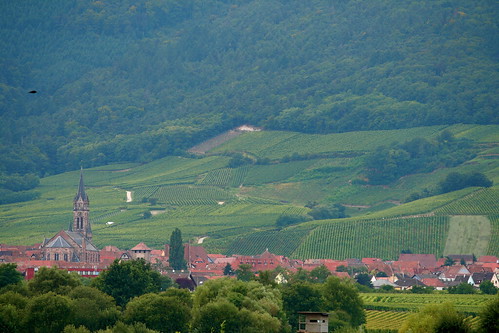
The route arriving in Alsace by way of Champagne takes you over the famed Vosges Mountain range to a lush valley, more Germanic than French, where Riesling reins supreme. The Alsatian valley is a long and narrow one, dotted with historical villages, each with a steeple peaking through the red-tiled roofs and brightly coloured buildings of yellow, turquoise and red all decorated with bougainvillea spilling from every window sill.
Alsace is renowned for its production of single noble grape varieties vinified to preserve the freshness and purity of the fruit and the minerality of the soils, packaged in elegant flûted bottles. Typically dry to off-dry, there are also two other classifications of Alsatian wines depending upon the ripeness of the grape: the sweeter styles of Vendange Tardive (Late Harvest) and the botrytis-affected Selection de Grains Nobles. The top examples of Alsatian wines have the ability to age for decades. Organic and biodynamic vinification and minimal intervention winemaking is the status quo for this region.
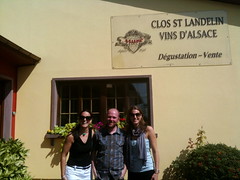 Clos St Landelin, René Muré
This is a family-driven winery as we were welcomed into the tasting room by René Muré, the 11th generation of the business. Both children, Thomas and Véronique work at the winery and in the vineyards as well. The nurturing and care given by the family to the vines, which surround the domaine, is evident in the glass. Common among many Alsatian winemakers, René Muré produces the full range of varietals and styles of the region.
 Domaine André Ostertag
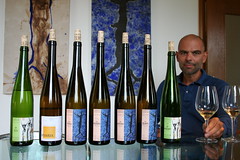
The front gates of the modest Ostertag Domaine open to a tranquil backyard lined with well-tended, biodynamically farmed vines. André classifies his wines into 3 categories, according to the expression of the unique terroirs: ‘Vins de Fruit’ wines emphasize the purity of the fruit, ‘Vins de Pierre’ expresses the soils and ‘Vin de Temps’ includes the wines that have the greatest longevity. The captivating labelling is another personal touch to the wines, as each bottle is adorned with the original artwork of André’s wife. André’s gentle nature revealed itself during a stroll trough his pet project: a small plot of vines that he planted in a yin yang formation above his cellar. It must be said that all 3 styles embody the passion, intensity and austerity of the winemaker himself.
 Domaine Weinbach
Colette Faller et ses filles
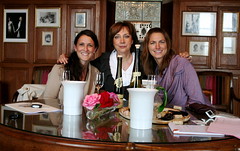
The wines produced by this family are of outstanding quality as each exhibits the power, character and elegance of the women behind the Domaine. The winery and family home are one, located in the middle of the walled Grand Cru Clos des Capucins. Greeted at the door by the family monarch, Colette Faller, we tasted 19 unique wines with the sophisticated Catherine at their dining room table while her mother prepared the morning breakfast in the adjacent kitchen. Where else in the world would you taste top flight Rieslings to the smells and crackle of bacon? Each wine was exquisite.
 Maison Trimbach
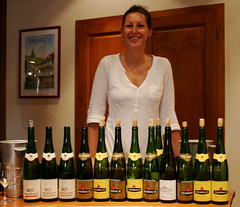
Maison Trimbach is a big player from the region, as evidenced by the company with whom we shared the extensive tasting: top buyers from around the world. Led by the young and graceful Anne Trimbach, who commanded the room with ease and charm, we tasted the range of the Trimbach portfolio including back vintage examples of their prestige and collection wines. The wines, especially the Cuvée Frédéric Emile and the domaine’s top wine, Clos Sainte Hune, are benchmark examples of Alsatian Rieslings. We wrapped up our day with a tour through the winery which houses both traditional and modern equipment and the rustic family cellars.
Alsatian wines, with their purity, power and broad food pairing abilities, are enough to draw any wine enthusiast to the region. However it is the charm of the villages and the openness of the people with their emphasis on family that will make every visitor a fan, leaving wanting more.
Heavenly Healdsburg
Posted by Megan
on June 25, 2010
1 comment

Tony Bennett left his heart in San Francisco. I left mine in Healdsburg, humming.
Sonoma County is one of the great wonders of the California wine world, with a land and climate of incredible diversity, fantastic vineyards, beautiful architecture and winemakers who are crafting amazing wines. Some would argue this is where fine wine of California all began.
Resting just west of the (more famous) Napa County, Sonoma County is made up several AVA valleys (the American version of France’s AOC designation) with the terroir distinctive in the wines that are produced. The town of Healdsburg is perfectly nestled in the heart of it all.
Healdsburg is authentic with a welcomed touch of yuppie; It’s the real deal with sophistication and taste. Before you even touch down in this part of California wine country pack your layers, even in the dead heat of the summer. This is the region with that glorious foggy chill most mornings – from sunrise until noon hour – so you’ll need a sweater, or two!
I’ve been to Napa Valley and Sonoma Valley a number of times and what makes Healdsburg and the surrounding valleys in Sonoma County so rewarding is not only the wines but the approachability of the people. Your first order of business when you arrive in this charmingly quiet town is to find The Wine Shop and talk to Pedro.
Let it be known: Pedro is a walking Healdsburg encyclopedia. Born and raised in Healdsburg, riding bikes in the dirt and earth that has become the grape-growing soils, this man will point you in the right direction. Have a winery map, a pen and a palate – sit at the tasting bar and sip on some local specialties while you plot your attack. He is also an avid biker and loves the long, winding (read: challenging) rides that are dreamy to him, but get in the way of wine tasting for someone like me. Know what you want; he’ll hook you up.
To wine taste by bike or by car? Well, I did both, and to be honest, if you really love biking and you don’t mind cutting into some valuable wine tasting time, go for the bike. Plus there’s a little more leeway in the spitting vs. swallowing throughout the course of your day. There are a few bike shops in town that are very well equipped to handle the wine tasting biker novice or expert. You’ll be happy with Wine Country Bikes.
I’m all for the romance of “…biking along rolling country hills with vineyards on all sides, valley vistas and aromatics filling the air…”, however, there’s a limit. We rented bikes one of the days to tackle the Westside Road heading south through the Russian River Valley. There is no bike lane, the drop off of crumbling asphalt feels like a near-death experience with every roaring car that blasts by and the number of wineries you can visit is cut in half because you’ve spent your day hoofing it and sweating up several “rolling” hills. When I do this valley again, I will not bike the wine route. Even Pedro agrees. (If you are looking for an amazing bike ride, wine tasting aside, talk to Pedro and the guys at the bike shops. The Coleman Valley Road from Occidental out to the coast is supposed to be one of the most spectacular bike rides you will ever do.)
Onto The Wines!
We made it to a fraction of what these valleys have to offer; two days is not nearly enough time. Every tasting room we entered was a fabulous experience. The main ingredient for this was the people. We tasted amazing wines, some of the architecture was stunning, but the connection with the people and their generosity with their time is why we bought more wine and why I will remember my time spent there. A friendly, knowledgeable, easy-going staff goes a long way – and ultimately sells wine. (For etiquette and considerations like making appointments ahead of time and budgeting, Bill Eyer has written a helpful article on great tasting room tips.)
My Russian River Valley Hit List:
Twomey – Outstanding building and tasting room. Brought to you by the family of Silver Oak Cellars, we were lucky to taste the 01 Merlot thanks to our gracious host Ann. Relatively new Aussie winemaker Ben Cane doing nice things with Sauvy B., Pinot Noir and Merlot.
C. Donatiello – Relatively new, the wines, the building and the grounds are all beautiful – well worth the visit. Alyssa and Vanessa in the tasting room were tremendously helpful and kind with their time – a lot of friendly faces and big smiles from everyone who works here.
Rochioli – A well-established winery, working these vineyards for decades, making fantastic wines: Chardonnay, Sauvignon Blanc and their single-vineyard Pinot Noirs are rated as some of the best in the world (by none other than Robert Parker).
Hop Kiln – The building is definitely worth a look. Head inside if you have time on the clock. (I did not, so no notes here on the wines unfortunately, but they’ve been around since the 70’s and are known for the “Big Red”.)
Arista – A perfect place to park it. This winery has an interesting building architecturally speaking, but it’s the Japanese gardens with trickling waterfalls and vineyard vistas that makes this a picnic stop on the tour. Grab a chilled Gewürztraminer and get into that sandwich you’ve packed from Oakville Grocery in town (see ‘lunch’ below). You’re likely to get a visit from a curious and friendly chocolate lab too.
Lynmar Estate – This was my favourite if I had to pick just one. This place is out of a book. Somewhat of a new kid on the block, they are producing some wonderful and promising Chardonnay and Pinot Noir, the people are brilliant, the gardens – oh the gardens! – are unbelievable. You could easily spend a few hours at Lynmar, and you should. Plan for lunch here, or wander the fresh vegetable and herb gardens after your tasting. If you’re in town on a Friday evening in the summer, check in with them for their outdoor “Pinot and Pizza” nights, offered once a month: pizza dinner outside from a woodstove oven at picnic tables, set in a wooded clearing between vineyards, steps from the tasting room.
There are so many more – I would have liked to have made it to Thomas George Estate (beautiful new caves), Merry Edwards, as well as arrange ahead of time for a tasting at William Seylem.
My Dry Creek Valley Hit List:
Bella Vineyards – My kind of place: tucked away at the end of a narrow, winding country road, vines sloping upward to the sky above you, opera soaring out of the winery and happy, full-of-knowledge tasting room managers found deep in the dimly lit caves – awesome Zins, Petite Verdot and rosé. You can also book a private vineyard trip and taste limited releases among the vines with a 360-degree view of the valley – Book it!
Zichichi – Wow, another favourite. This experience was pretty supreme. Barrel tasting with the winemaker himself, Mikael Gulyash and his assistant Mike. Their 70-year old vine Zin was the choice for dinner that night at a local restaurant (see ‘dinner’ below). Ask for the barrel tasting!
Mauritson – Simon and Mandy were so gracious. We squeaked into the tasting room at the 11th hour and they still spent 45 minutes with us after closing. This was special. We chatted about the history, the terroir, the soils, the winemaking and of course picked up a few wines to enjoy later. Plus Mandy made our dinner reservation for us on the phone while we sipped – now that’s service!
As well, definitely head to Preston, a must-see organic farm, Michel-Schlumberger, Unti, Papapietro Perry Winery and Nalle. Some of these tasting rooms require appointments.
Dining in Healdsburg
For breakfast, Costeaux French Bakery – great coffee, awesome bread, excellent full breakfasts, homemade granola, a perfect morning atmosphere (sit at the high top bar tables along the back wall with the morning papers splayed out in front of you), the best bathroom wallpaper I’ve ever seen (which I am planning for my next home), and you can’t go wrong with a freshly baked pain au chocolat.
Lunch: There is no other place but the Oakville Grocery Co. – they make the best sandwiches to enjoy either on their sun-drenched patio or take-away for your winery picnic lunch later in the day. It’s exactly the kind of specialty shop you wish for on your hometown street corner. Plus you can taste and buy wine (of course) and there are plenty of local selections.
Dinner: We decided this is where we were going to go big. Healdsburg is home to a few of California’s top restaurants. Charlie Palmer’s Dry Creek Kitchen was phenomenal. Here’s a teaser: four kinds of fresh baked bread offered throughout the meal, chilled leek potato soup, pork tenderloin fennel encrusted with swiss chard, duck confit and caramelized onions with black truffle jus, chocolate bread pudding and Guinness ice cream with chocolate Grenache cake. Outstanding. Small tip: bring in your own wines from any local winery and there’s no corkage fee.
The ultimate dining experience and where I had my most memorable meal to date was at Cyrus. Our chef’s tasting menu was superb, the service was impeccable, the atmosphere was the ideal blend of intimate fine dining and a lively, casual buzz. I will never forget it: fois gras torchon with rhubarb, butter poached lobster with marjoram spring onions, hoisin glazed short rib, lamb loin roulade, black truffle risotto, tiramisu, espresso gelato, a cheese cart to melt over – salivating yet? It was stunning. And the wines to pair. You can save on the wine cost and bring in your own. You can also sit in the outer bar and order a la carte, but that would be missing the entire dining experience, wouldn’t it?
Where to stay? There are ample places to choose from for where to lay your head. If you want to spend your money on wine and fine dining, there are a few cheaper options that are well known and liked, some in town and others just a 10-minute walk from the town centre. To have the ultimate experience, stay right in town, steps from everything, and book in at Hotel Healdsburg. One word: SPA.
Ah, Healdsburg. We shall meet again…
[To live my few days in photos and to get a visual sense of all that was written above, here is my Flickr set of the Healdsburg trip.]
Rosé Season Is Open
Posted by Megan
on May 31, 2010
No comments

If you live in a cool climate like I do, at long last: ‘tis the season for rosé. Morning dog walks are warm and fragrant, the afternoon sun heats your skin and backyard barbequing is well underway. It’s time for a little pink juice on that sun-drenched patio.
If this is any indication: a few weeks ago I was pouring for Loire winemaker Bernard Chereau – Chereau Carré, one of the top domaines of the Nantais, at the Vancouver Playhouse International Wine Festival and out of the flight of five spectacular wines (four of which were his well known and liked Muscadet wines), the ladies all flocked to the one rosé – in droves. And it’s not reflective of that whole “pink-is-for-girls” thing. The ladies definitely get it: rosé rocks and pink is still in. It’s summer in a glass. Who better to look to than the French? Rosé wine sales surpassed white wine sales in France, circa 2007.
Before getting to my short list of the wines you need to pick up and enjoy this summer, what makes a rosé a rosé? The wine gets its colour from the amount of time the red grape skins are left in contact with the juice after the grapes have been crushed. It’s up to the discretion of the winemaker as to the style of wine and the length of time this contact occurs, which helps determine the colour of rosé wine – anything from pale orange, to copper, to pink salmon, to almost red and purple. Getting a little more technical, rosé is also made as a by-product of red wine fermentation when the pink juice is removed at an early stage and fermented separately, known as saignée. Rosé wines are made with just about any red grape variety, the most common being Grenache and Cinsaut.
There still seems to be a massive misconception that rosé wines are sweet (think the once-popular Cali White Zin “blush wine”, off-dry to sweet). But the most enjoyed, and historically like the original rosé wines produced in the Loire Valley, are in fact bone dry – and bright, fresh and delicious!
To kick this list off, I did a little ‘homework’ myself and tasted a fine selection of rosés of various styles. I think you’ll find a few here that fit your taste buds as well as your budget. While we can enjoy rosé at any given time of the year, I think we can all agree that it’s the hot sun and outdoor dining that somehow make these wines taste that much better. It’s scandalous to make a list of a mere five rosés – there are plenty more, but these are here to get you started and inspired to enjoy some summer sipping.
- Domaine des Huards, Cheverny, Val do Loire 2009
$19.00 @ Marquis Wines
This wine has everything you’d expect and want in an easy patio-sipper on a sunny afternoon, as the cliché goes. It’s light, refreshing, crisp, and acid to please with a healthy blast of citrus and subtle raspberry. Have it on its own or knock back a few grilled clams with a squeeze of lemon. - Provenquiere Rose “Cuvee P” 2008
$15.00 @ Marquis Wines
Enter this classic southern French rosé filled with citrus, red berries, sweet spice and floral aroma. Enjoy this easy-drinker with a citrus summer salad, a soft-rind mild brie or, as the region would dictate, bouillabaisse. - Frias Family Vineyards Rosé, Napa
$30.00 @ Kitsilano Wine Cellar
This wine is two things: really fun to drink and definitely an acquired taste. I say this because it’s almost sherry-like, but don’t let that dissuade you if you’re not a sherry fan. It’s a blend of Pinot Noir, Gamay and Cabernet Franc, with characteristics that are quite complex and well balanced. I wouldn’t call it “refreshing” as the label touts, as it’s a little hot on the alcohol, but it has a good dose of fruit – black cherry and watermelon predominantly – with some earthy sweet spice and a kick of a pleasant tartness at the end. It demands to be eaten with an olive tapenade, bruscetta or oily fish. - Domaine de la Mordorée, Tavel AOC 2008
$40.00 @ Liberty Wine Merchants
Perhaps one of the more popular rosé wine appellations of the world, and one of the finest, is Tavel in the south of the Rhone Valley in France, where all wines made here must be rosé. This is truly a beautiful wine: dry, crisp acidity, rich and spicy; a bold blend of Grenache and Cinsaut. It’s a little pricey, but definitely worth it – a mouth-melter. - Vina Tondonia, Vinos Fino de Rioja, Lopez de Heredia 1993
$42.00 @ Kitsilano Wine Cellar
This is going out on a bit of a limb, and it’s more expensive than your average “patio-sipper” rosé, however, if you want to try something totally radical, this is it. For starters, there is nothing pink about it – it’s a beautiful, rich orange. The style is slightly oxidized with nutty caramel, a little oak, some minerality and a touch of zesty orange. You simply must taste this wine.
I’m always looking for the next best rosé, so let’s hear your picks.
Thanks to John at Marquis Wines and Kirk at Kitsilano Wine Cellar for your recommendations.